
Free Cataract Surgery Restores Sight and Renewed Hope to Hundreds in Ejura-Sekyedumase
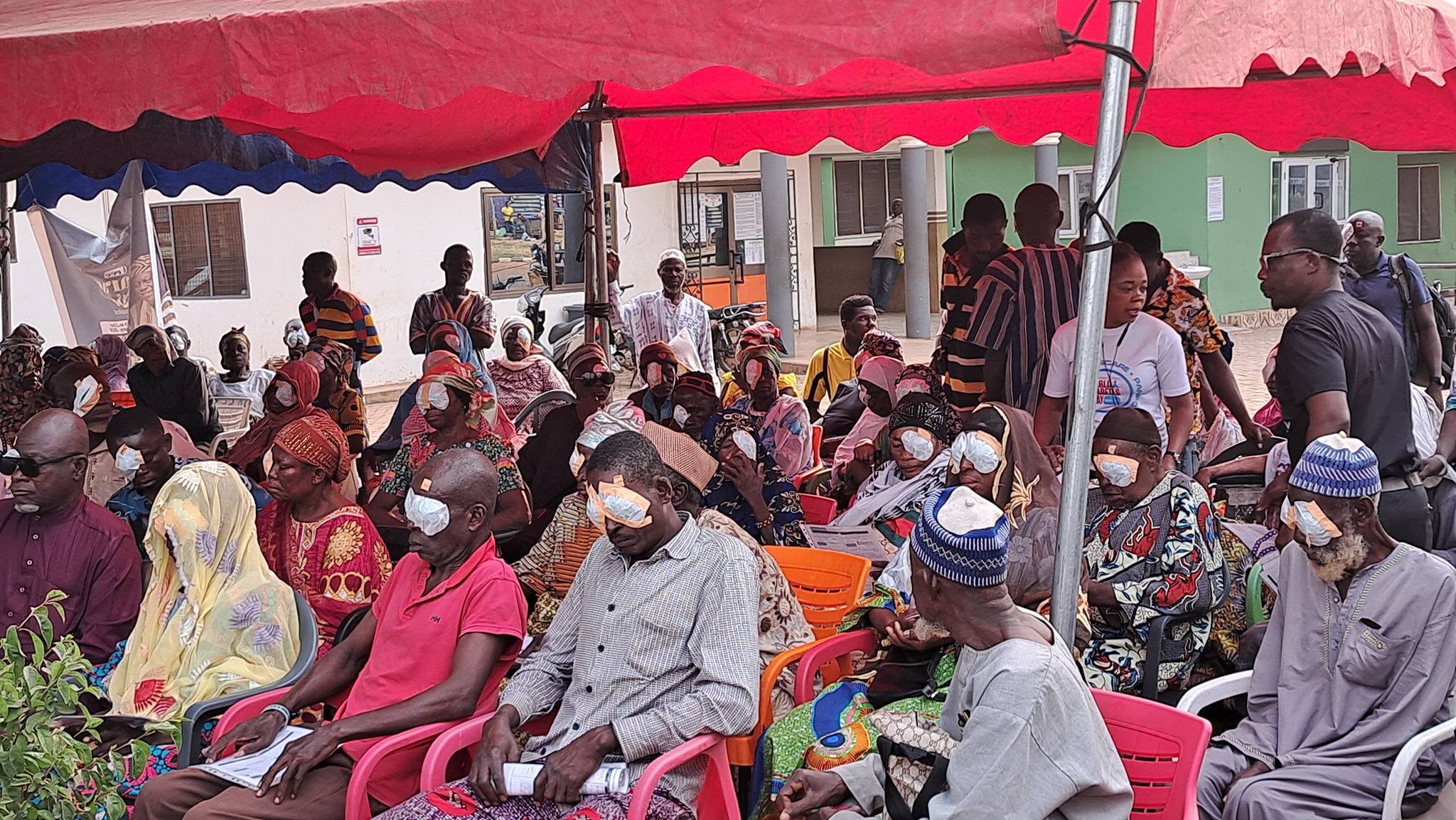
Laughter, smiles and tears of joy filled the Ejura Government Hospital as residents who had lived with severe visual impairment experienced the life-changing impact of free cataract surgery.
The emotional scenes followed a comprehensive cataract screening and surgical outreach programme organised in the Ejura-Sekyedumase Municipality, aimed at identifying and treating residents suffering from cataract-related visual impairment and avoidable blindness.
The initiative, which culminated in the successful completion of the surgical phase, brought renewed hope, dignity and independence to beneficiaries who had struggled for years with poor eyesight.
Prior to the surgical intervention, extensive cataract screening exercises were conducted across communities within the municipality. The outreach enabled health professionals to examine residents and identify patients requiring cataract extraction.
In total, 548 patients were clinically assessed and listed for cataract surgery, while 252 patients successfully underwent surgery involving 356 eyes. The figures indicate that 104 beneficiaries had bilateral cataracts and received surgery in both eyes.
Patients who could not undergo surgery during the scheduled period, including those who reported at a later stage, were documented and scheduled for subsequent interventions.
The surgical programme was conducted at the Ejura Government Hospital through a collaborative effort involving the Daybreak Vision Project, the Member of Parliament for Ejura-Sekyedumase, Hon. Alhaji Muhammad Bawah Braimah, and the medical team of the Ejura Government Hospital.
The programme was led by Dr. Akwesi Ahmed, a Consultant Ophthalmologist at the Komfo Anokye Teaching Hospital, who worked with a team of specialist eye surgeons and other healthcare professionals to provide the surgical services.
The intervention followed an extensive community screening exercise that covered nearly 2,000 residents across the municipality. The screening revealed a significant number of people living with cataracts, many of whom had experienced deteriorating vision for several years without access to surgery.
For many beneficiaries, the programme represented more than a medical procedure. It offered them the opportunity to regain independence and return to activities they had previously abandoned because of poor vision.
Some farmers had been unable to continue working on their farms, while elderly residents increasingly depended on family members to move around, perform routine tasks and identify people around them.
One beneficiary, Richard Yelbea, a Senior Chief Officer at the Ejura Camp Prison, described the moment he regained his sight as deeply emotional. Following the surgery, he was able to read a written message and recognise people around him.
He expressed his excitement at being able to see clearly again and thanked the medical team and the MP for supporting the initiative.
Another beneficiary, Yaw Agyei Afreh, said the surgery was quicker and easier than he had expected.
He expressed gratitude to the medical team and prayed for continued strength and knowledge for the doctors to enable them to assist more people suffering from visual impairment.
The programme also brought relief to beneficiaries who had lived with poor eyesight for many years. One beneficiary reportedly lived with severe visual impairment for more than two decades before receiving treatment.
Another patient, 65-year-old Paul Amanhyia from Drobon, explained that he travelled to the hospital the night before his scheduled surgery because of the distance between his community and the hospital, as well as unreliable transportation.
Another beneficiary, 65-year-old Victoria Akosua Dzabah from Ejura, said she had struggled with poor eyesight for approximately five years and hoped the surgery would enable her to resume her daily activities with greater independence.
The Ophthalmic Nurse in charge of the Eye Clinic at the Ejura Government Hospital, Jemima Okyere, said the intensive screening exercise had revealed that many residents were living with cataracts without fully understanding the condition or knowing that effective treatment was available.
She encouraged people experiencing vision problems to seek medical attention rather than allowing fear or misconceptions about cataract surgery to prevent them from accessing treatment.
The lead surgeon, Dr. Akwesi Ahmed, also urged people experiencing vision difficulties to seek early medical attention. He emphasised that cataracts could affect not only individuals but also their families and communities by limiting people’s ability to work, move independently and participate fully in everyday life.
According to him, the goal of the intervention was to restore sight to people living with avoidable blindness and help them regain their independence.
The Member of Parliament for Ejura-Sekyedumase, Hon. Alhaji Muhammad Bawah Braimah, said the initiative was prompted by concerns raised about the prevalence of cataracts in the municipality.
He explained that data presented by the Daybreak Vision Project indicated a significant cataract burden among residents, creating the need for a coordinated intervention to provide screening and free surgical treatment to affected persons.
The MP noted that vision impairment could have serious consequences for productivity and quality of life, particularly among elderly residents and people whose livelihoods depend on farming, trading and other forms of daily economic activity.
He said the decision to support the programme was based on the belief that when a health condition is treatable, leaders and stakeholders have a responsibility to help affected residents access the necessary care.
He further indicated that the intervention would not end with the first phase, with plans to support subsequent efforts to reach eligible residents who could not benefit from the initial surgical outreach.
The successful completion of the programme has been welcomed as a significant contribution to improving access to specialised eye care within the Ejura-Sekyedumase Municipality.
The organisers expressed appreciation to the medical team from the Daybreak Vision Project, led by Dr. Ahmed, as well as Dr. Aboagye and the dedicated technical, nursing and support staff of the Ejura Government Hospital for their professionalism and commitment to patient care.
Appreciation was also extended to all stakeholders whose support contributed to the success of the intervention and, most importantly, to the beneficiaries who courageously underwent the procedures.
The programme demonstrated the importance of partnerships between healthcare professionals, political leadership, community stakeholders and development organisations in addressing preventable and treatable health conditions.
For the beneficiaries, however, the most important outcome was simple but profound: the ability to see again.
Their smiles, songs and expressions of gratitude following surgery provided a powerful reminder of the human impact of accessible healthcare. For residents who had spent years living with visual impairment, the restoration of sight represents not only improved vision but also renewed dignity, independence, productivity and hope.
The intervention therefore stands as a significant step towards improving the quality of life of residents in the Ejura-Sekyedumase Municipality and strengthening access to essential eye care services for vulnerable members of the community.
0 Comments